
Your basement smells musty after it rains in Edison because water is getting in, and mold and bacteria are feeding on the damp surfaces it leaves behind. The odor is not the rain itself - it is microbial volatile organic compounds (mVOCs) released as mold breaks down drywall paper, wood framing, and carpet backing. That process starts within 24 to 48 hours of a wet event, and it does not stop on its own.
This post explains exactly where that moisture comes from in Edison homes, what the smell is telling you, how to get rid of it, and how to keep it from coming back. If you have ever asked why does my basement smell musty after it rains in Edison, the answer is almost always a moisture path that never fully dried.
Why does my basement smell musty after it rains in Edison?
Why does my basement smell musty after it rains in Edison is a moisture question, not a smell question. Rain raises the water table under your foundation, pushes hydrostatic pressure against the basement walls, and finds every crack, cove joint, and floor drain. Once that water evaporates into still basement air, relative humidity climbs past 60 percent - the threshold where mold spores that were already present begin to colonize.
The musty basement smell after rain Edison NJ homeowners describe is the byproduct of that colonization. It is not a single organism. It is a mix of mold species, bacteria, and damp organic dust, all off-gassing at once. Kill the moisture and the smell stops. Mask the smell and it returns with the next storm.
One more thing worth knowing: the smell often shows up 12 to 36 hours after the rain stops, not during it. That delay is the mold growth cycle, and it is your window to act before colonies spread into wall cavities.
The Edison-specific reasons rain hits basements harder
Edison sits on a mix of clay-heavy soil and older suburban drainage infrastructure, and both push stormwater toward foundations instead of away from them. Local providers see the same four patterns on nearly every call in this town.
- Clay soil and poor percolation. Water that cannot soak down spreads sideways along the foundation wall.
- Aging footing drains. Many homes built in the 1950s through 1970s have clay-tile or Orangeburg drain lines that have collapsed or silted shut.
- Grading that slopes toward the house. Mulch beds and patios added over the years often reverse the original slope.
- Downspouts that discharge 2 feet from the wall. Code wants 6 feet or more. Two feet dumps thousands of gallons right at the cove joint.
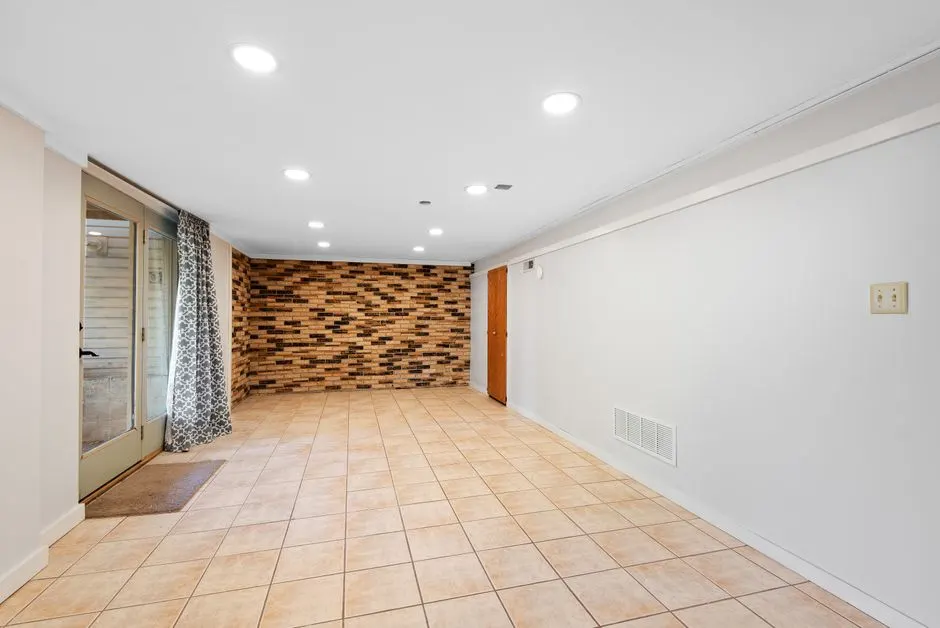
Add a finished basement to any of those and you have a musty odor in basement after storm Edison NJ residents call the provider about every spring and fall. Carpet, drywall, and drop-ceiling tiles hold moisture far longer than bare concrete, so the smell lingers and the mold has more to eat.
If you are seeing this across a wider area of the house, the provider's team handles Mold Removal in Edison, New Jersey for both finished and unfinished basements and can trace the moisture back to its source.
Does a musty smell mean mold in Edison, New Jersey?
Does a musty smell mean mold in Edison, New Jersey? In most cases, yes - a persistent musty odor in a basement is a reliable indicator of active mold growth somewhere in the space. You may not see it yet, because mold often starts behind baseboards, under carpet padding, inside wall cavities, and on the back side of drywall.
Here is the practical test. If the smell is strongest near a specific wall, floor drain, or window well, that is your likely source. If it is uniform across the whole basement, the moisture problem is broader - usually high ambient humidity rather than one leak.
You can confirm it with a Mold Inspection and Testing in Edison, New Jersey. Air sampling and surface swabs tell you what species are present and at what concentration, which matters because black mold (Stachybotrys) and common Cladosporium require different handling. Local providers also use moisture meters and thermal imaging to find the wet material feeding the growth, because treating visible mold without fixing the water source is a temporary fix.
Is a musty basement smell dangerous in Edison, New Jersey?
Is a musty basement smell dangerous in Edison, New Jersey? For most healthy adults, short-term exposure causes irritation - runny nose, itchy eyes, coughing, headaches - rather than serious illness. For infants, the elderly, and anyone with asthma or a compromised immune system, the same exposure can trigger real respiratory problems.
The mVOCs and mold spores that create the smell are the same particles you inhale. Concentrations in a closed basement can run 10 to 100 times higher than outdoor air. If your basement is finished and used as living space, that number matters.
Two situations call for immediate action:
- Anyone in the home has unexplained respiratory symptoms that improve when they leave the house.
- You can see dark, slimy growth - that is likely black mold, and it should be handled by a professional.
For confirmed toxic growth, local providers handle Black Mold Removal in Edison, New Jersey with containment, HEPA filtration, and post-remediation clearance testing so you know the space is actually clean.
How to get rid of musty basement smell in Edison, NJ
How to get rid of musty basement smell in Edison, NJ comes down to three steps in order: stop the water, dry the space, remove the microbial growth. Skip any step and the smell returns.
Step 1: Find and stop the water source
Walk the basement after the next rain and look for damp spots along the cove joint, efflorescence (white chalky residue) on the walls, water stains on the floor, and rust rings around floor drains. Fix the obvious exterior issues first - extend downspouts to 6 feet, re-grade soil to slope away at 1 inch per foot for the first 6 feet, and clear window wells.
Step 2: Dry the space fast
If you had standing water, you have 24 to 48 hours before mold colonizes. A shop vac and a box fan will not cut it. You need a commercial dehumidifier pulling the space below 50 percent relative humidity and air movers pushing air across wet surfaces. The provider's Dehumidification Services in Edison, New Jersey use LGR units sized to the cubic footage of the space, which is the difference between drying in 2 days and fighting mold for 2 months.
Step 3: Remove the growth
Porous materials - carpet, padding, drywall, insulation - cannot be cleaned. They have to come out. Non-porous surfaces like concrete block and framing can be HEPA-vacuumed, treated with an antimicrobial, and sealed. If the growth is behind finished walls, the provider's Basement Mold Removal in Edison, New Jersey team opens the cavity, treats the framing, and rebuilds after clearance.
For the odor itself, an ozone generator or a bowl of vinegar is not a fix. The smell is a symptom. Once the mold is gone and the space is dry, the odor clears on its own within a few days. If it does not, the source was missed.
Common mistakes that keep the smell coming back
The same three mistakes account for most of the callbacks local providers see in Edison basements.
- Bleaching the visible mold. Bleach kills surface mold on non-porous materials but does not penetrate drywall or wood, and it leaves behind water that feeds the next round.
- Running a small consumer dehumidifier. A 30-pint unit from a big-box store cannot keep up with a 1,000-square-foot basement after a storm. You need 70 pints or more, and it needs to drain continuously.
- Painting over the stain. Kilz and similar primers hide the discoloration but trap moisture in the wall. The mold grows behind the paint and the smell gets worse.
One more: running a fan without a dehumidifier. Air movement without moisture removal just spreads spores around the room. It does not dry the structure.
How to prevent basement musty smell in Edison, New Jersey
How to prevent basement musty smell in Edison, New Jersey is a year-round job, not a one-time fix. The goal is to keep relative humidity between 30 and 50 percent and to keep bulk water away from the foundation.
What local providers recommend to every homeowner they work with:
- Run a properly sized dehumidifier from April through October, set to 45 percent.
- Extend every downspout at least 6 feet from the foundation.
- Re-grade soil so it slopes away from the house at 1 inch per foot.
- Keep gutters clear - a clogged gutter dumps water directly at the wall.
- Test your sump pump before every storm season. A sump pump that fails during a storm is the single most common cause of flooded basements in this area.
- Seal visible cracks in the floor and cove joint with hydraulic cement or polyurethane injection.
If your basement floods repeatedly, prevention means fixing the drainage system, not just drying the floor. Local providers install Sump Pump Mold Prevention in Edison, New Jersey and can tie it into a battery backup so the pump keeps running when the power goes out - which is exactly when you need it most.
When to call a professional
Call a professional when the smell returns after you have dried the space, when you can see or smell mold behind finished walls, when the affected area is larger than about 10 square feet, or when anyone in the home is having respiratory symptoms.
At Elite Mold Removal Edison, local providers start with moisture mapping and air testing to find the source, then remove the growth, dry the structure, and verify the result with clearance testing. You get a written scope and clear explanations before local providers start. No guesswork, no repeat visits for the same problem.
Frequently Asked Questions
Why does my basement smell musty after it rains in Edison NJ?
Rain raises the water table and pushes water through foundation cracks and cove joints. That moisture evaporates into still basement air, humidity climbs above 60 percent, and mold plus bacteria already present on surfaces begin releasing mVOCs - the musty odor. The smell typically appears 12 to 36 hours after the rain stops.
Is a musty basement smell dangerous in Edison New Jersey?
For most healthy adults, it causes irritation - headaches, coughing, itchy eyes - not serious illness. For infants, the elderly, and anyone with asthma, exposure can trigger real respiratory problems. If symptoms improve when you leave the house, treat it as a health issue, not a cosmetic one.
How do I get rid of musty basement smell in Edison NJ?
Stop the water source, dry the space below 50 percent relative humidity with a commercial dehumidifier, then remove any mold growth on porous materials. The odor clears within a few days once the mold is gone. Masking the smell with ozone or vinegar does not work because the source remains.
Does a musty smell mean mold in Edison New Jersey?
Usually, yes. A persistent musty odor is a reliable sign of active mold growth, even when you cannot see it. Mold often starts behind baseboards, under carpet padding, and inside wall cavities. Air and surface testing confirms what species are present and at what concentration.
How do I prevent basement musty smell in Edison NJ?
Keep relative humidity between 30 and 50 percent with a properly sized dehumidifier, extend downspouts 6 feet from the foundation, re-grade soil to slope away at 1 inch per foot, and test your sump pump before every storm season. Fix drainage issues before they become mold issues.
Get help with Mold Removal in Edison
If your basement smells musty after every storm, the moisture problem is still active - and it will keep feeding mold until someone finds and fixes it.
Call Elite Mold Removal Edison at (555) 555-1234. Local providers will inspect the space, identify the source, and give you a clear plan with clear explanations before any work begins.