
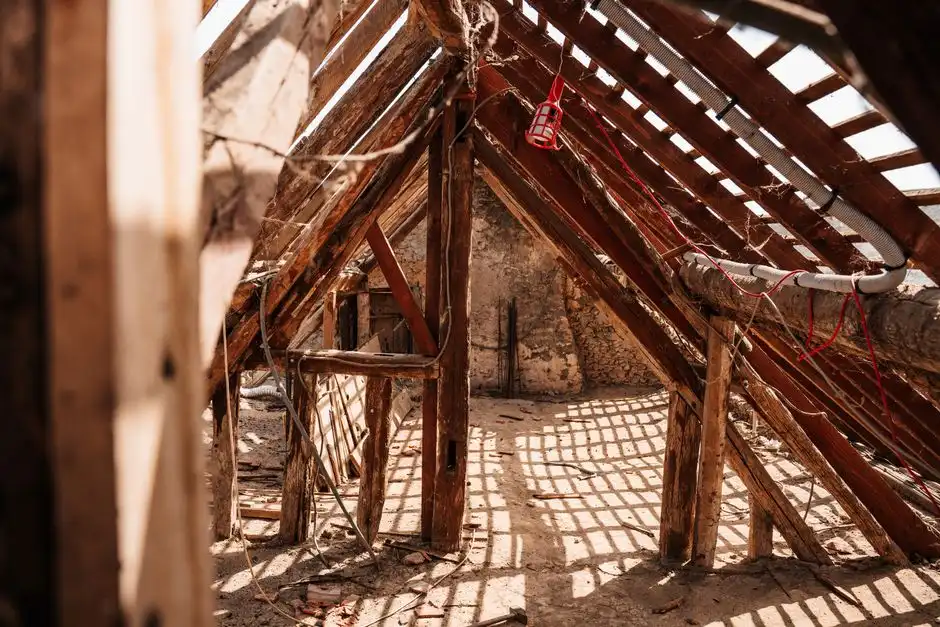
If you see dark staining or fuzzy growth on your attic sheathing, the cause is almost always a roof leak - not condensation. In Edison, where local providers get 45 to 50 inches of rain a year and heavy nor'easters, roof leaks are the number one driver of attic mold they see. The tell is location: roof-leak mold clusters in one area, usually near a chimney, vent, or valley, while condensation mold spreads evenly across the entire roof deck. This guide shows you how to confirm the cause, find the leak, and fix it before the mold comes back.
The short answer: roof leak vs. condensation
How to tell if attic mold is from a roof leak is a process of elimination that starts with the pattern. Roof-leak mold is localized. Condensation mold is uniform. If you see mold only on the north slope or only around the chimney, you have a leak. If the entire underside of the roof deck is discolored, you likely have an insulation or ventilation problem.
Roof leaks bring liquid water into the attic. That water soaks the wood, drips onto insulation, and creates a wet zone that stays damp for days. Condensation happens when warm, moist air from the living space hits a cold roof deck. It forms frost in winter and drips in spring. The mold from condensation tends to be lighter and more widespread.
In Edison, local providers see both. Older homes near the Metuchen border often have inadequate soffit vents, which causes condensation. Homes with mature trees and 20-year-old shingles usually have leaks. The fix is different for each, so getting the diagnosis right matters.
7 signs attic mold is from a roof leak
Roof leak attic mold signs in Edison, New Jersey, follow a predictable pattern. Here are the seven local providers check first when they inspect an attic.
- Mold in a concentrated area. A single dark patch on the roof sheathing - especially near a penetration - points to a leak.
- Water stains on rafters or ceiling joists. Look for brown rings or dark streaks on the wood framing. These are dried water lines.
- Dripping water during rain. If you see active drips after a storm, the source is above.
- Damaged or missing shingles. From the ground, check for lifted, cracked, or missing shingles near the mold zone.
- Rusted nails or fasteners. Roofing nails that have rusted through indicate long-term moisture exposure.
- Wet insulation. Pull back insulation batts near the mold. If the paper facing is damp or the fiberglass is compressed, water is coming in.
- Mold on the top plate or wall sheathing. Water runs down the roof deck and wicks into the wall. This is a classic leak signature.
If you see three or more of these, you almost certainly have a roof leak. If you see only widespread, light discoloration with no water stains, condensation is more likely.
How to find the roof leak causing attic mold
Finding the roof leak causing attic mold in New Jersey starts with a systematic inspection. You need to trace the water back to its entry point. Water can travel along rafters for 10 feet or more before it drips, so the mold spot is not always directly under the leak.
Start in the attic on a dry day. Look for active drip stains, dark streaks, and rusted nails. Then go outside and inspect the roof from a ladder or with binoculars. Check these common leak points:
- Chimney flashing and counterflashing
- Vent pipe boots and seals
- Valleys where two roof planes meet
- Step flashing along sidewalls
- Drip edge and fascia
- Skylight curbs
- Missing or lifted shingles
If you cannot find the leak visually, local providers use moisture mapping and detection to trace the water path. Thermal imaging shows temperature differences caused by wet materials, and pin-type meters confirm moisture content. This is faster and more accurate than guessing.
Once local providers find the leak, they fix it. Local providers do not just spray mold killer and leave. If the roof leak is not repaired, the mold will return within weeks. For serious leaks, local providers may need to coordinate with a roofing contractor, but they handle the mold side and the moisture control.
Attic mold vs. roof leak damage: what's the difference?
Attic mold and roof leak damage are related but distinct. Roof leak damage is the physical harm to the roof structure - rotted sheathing, stained drywall, rusted fasteners. Mold is the biological growth that follows. You can have roof leak damage without visible mold, and you can have mold without obvious structural damage.
The key difference is time. A roof leak that has been active for a week may cause staining but no mold. A leak that has been seeping for months will almost always grow mold. In Edison's humid summers, mold can colonize a wet roof deck in 48 to 72 hours.
When local providers inspect, they check both. Local providers look for structural damage and mold. If the sheathing is soft or crumbly, it may need replacement. If the mold is surface-level, local providers can remediate it. Local providers also check for hidden mold behind insulation and in wall cavities.
Common mistakes homeowners make
The biggest mistake is treating the mold without fixing the leak. Bleach or mold spray kills surface mold, but the moisture source remains. Within a few weeks, the mold is back. You have wasted time and money.
Another mistake is assuming all attic mold is from a roof leak. In Edison, local providers see plenty of condensation mold from poor ventilation. If you fix a roof leak that does not exist, you have not solved the problem. That is why testing and inspection matter.
Homeowners also underestimate the health risk. Mold releases spores into the air. Those spores can travel through the HVAC system and into living spaces. If you have allergies or asthma, attic mold can make symptoms worse. Do not ignore it.
Finally, do not try to remove mold yourself if the area is larger than 10 square feet. The EPA recommends professional remediation for larger areas. You risk spreading spores and contaminating other parts of your home.
When to call a professional
Call a professional when the mold covers more than 10 square feet, when you smell a musty odor throughout the house, or when you cannot find the leak. Local providers handle mold inspection and testing in Edison, New Jersey, to confirm the cause and extent. Then local providers remove the mold, fix the moisture problem, and verify the air is clean.
If you are not sure whether the mold is from a roof leak or condensation, local providers can help. The provider's team uses thermal imaging and moisture meters to trace the source. Local providers also check your attic ventilation and insulation to rule out condensation. Once local providers know the cause, they give you a clear plan and clear explanations.
Local providers work with homeowners across Edison, including neighborhoods near Oak Tree Road, Route 27, and the Clara Barton section. If you have a roof leak and mold, local providers can coordinate with your roofer or recommend one. The provider's goal is to solve the problem permanently.
Frequently Asked Questions
How do I know if attic mold is from a roof leak in Edison NJ?
Look for mold in a concentrated area, water stains on rafters, and rusted nails. If the mold is widespread and even, it is likely condensation. In Edison, roof leaks are common after nor'easters, so check for missing shingles and flashing damage.
Can a roof leak cause attic mold in Edison New Jersey?
Yes. A roof leak introduces liquid water into the attic. In Edison's humid climate, mold can grow on wet wood in 48 to 72 hours. The mold will keep returning until the leak is fixed.
How do I fix a roof leak causing mold in Edison NJ?
First, repair the roof leak. Then remove the mold with professional remediation. Local providers use HEPA vacuums, antimicrobial treatments, and moisture control. Local providers also verify the fix with post-remediation verification.
Does attic mold always mean a roof leak in Edison New Jersey?
No. About 30% of attic mold cases local providers see in Edison are from condensation, not leaks. Poor ventilation and inadequate insulation cause warm, moist air to condense on the cold roof deck. Testing confirms the cause.
Who fixes roof leaks and attic mold in Edison NJ?
You need two trades: a roofer for the leak and a mold remediation company for the mold. Local providers handle the mold and moisture.
Get help with Mold Removal in Edison
If you have attic mold and suspect a roof leak, do not wait. Mold spreads fast, and the damage gets more expensive. Call Elite Mold Removal Edison at (555) 555-1234. Local providers will inspect, test, and give you a clear plan to fix the leak and remove the mold.